|
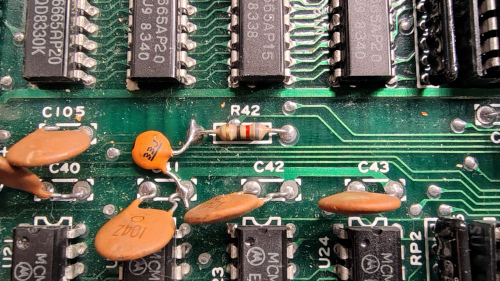
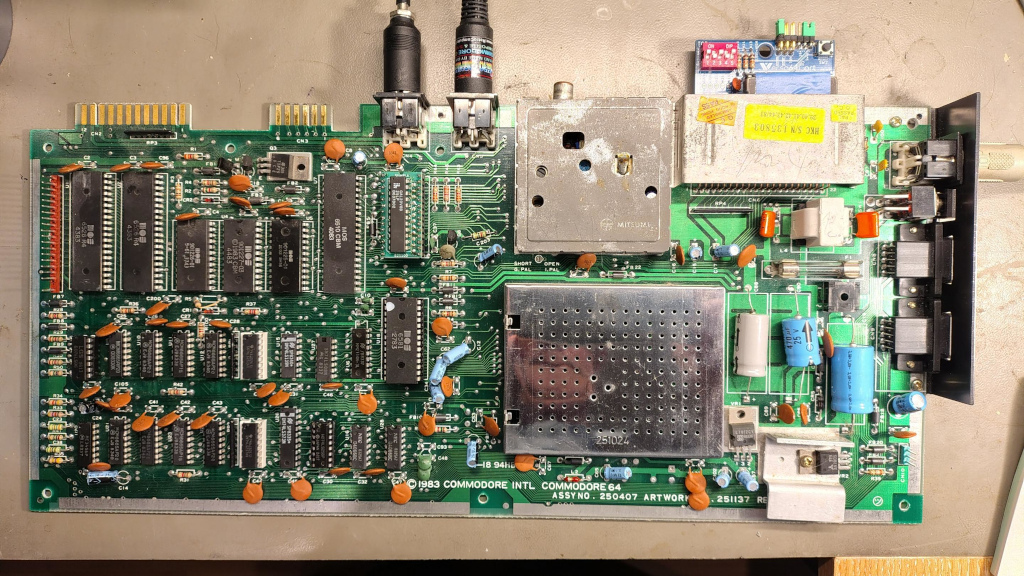
This early Commodore 64 Rev A board, dating from 1982, wasn't well. There was a black screen on power-up rather than the friendly blue one. Even plugging in a Commodore diagnostic cartridge made no difference. There was still nothing on the screen. The first thing I noticed was that several of the logic chips involved in accessing the RAM were socketed (ugly, old, white sockets), which suggested that the board had been worked on at some point in the past. I removed and checked these chips in a tester and they all appeared to be working correctly. As I had spares I replaced them anyway to eliminate them as possible fault causes. Unfortunately, that made no difference. The C64 still had a black screen. A common issue with these boards is the Programmable Logic Array (PLA). The PLA is a critical part of the computer, generating signals that control how the CPU, memory and other chips communicate with each other. The C64 PLA (906114-01) has a reputation for failure because it is a relatively heavily worked logic chip, and Commodore's design left it vulnerable to heat and electrical stress. The PLA became the next suspect. It wasn't in a socket so it had to be carefully removed with the help of a desoldering station. Once out it was checked in a chip tester - yep, it was bad. Rather than replacing the PLA with another ageing part, I decided to fit a SlimPLA. This is a small circuit board containing two modern chips that have been programmed to behave like the original device. The replacement also runs much cooler. Making a SlimPLA requires ordering a pack of circuit boards (you get 5 for under a tenner, so not a big issue), obtaining some blank programmable chips (GAL20V8 - I already had some), programming them and then soldering everything together, including some header pins to link the assembly to the main board. I fitted a socket on the C64, tried the new SlimPLA in the chip tester - it passed - and then inserted it into the socket. You can see the SlimPLA top middle in the picture above; there's one chip on the top of the board and the other is on the bottom - this makes the design 'slim'! Unfortunately, the C64 still wasn't behaving properly. After doing a bit more checking with a logic probe to verify that various signals seemed to be present where expected and not flatlining, I removed and tested a few more chips, but they all passed. A working board seemed 'close', but something was off - nothing tested 'dead' any more, but something was clearly still not right. During some online research, I came across a forum post referring to a timing component, a small capacitor, designated C204, that was sometimes fitted to C64 motherboards. The capacitor seemed relevant in terms of its placement and what it was intended to do - slow down a RAM timing signal coming from the PLA to improve overall stability. On some versions of the C64 motherboard there is a specific place for C204 and it's already fitted. On this older board not only was the capacitor not installed, but there was also no designated place for it. I followed the forum post and soldered the capacitor between two existing components to hook it into the right part of the RAM timing circuit. The capacitor I fitted had a value of 33 pF (picofarads). It's shown in a photograph to the right. That's an incredibly small value in electronic terms, just 33 × 10⁻¹² farads, but it made a surprisingly big difference; I powered on the board and it sprung into life running the diagnostics cartridge program. That was encouraging, but unfortunately, the diagnostics reported persistent faults with 3 RAM chips. Doing more research, I found a different version of the C64 service manual, which gave a recommended value of 150 pF for C204 (PDF page 37). I didn't have such a capacitor to hand. The closest I had was 100 pF, so I swapped in that. This time the machine started correctly and the RAM errors disappeared. I left that capacitor in place, and the C64 was finally back in working order. As a final check, I replaced the old white chip sockets with shiny new black ones and put the original logic chips back. They worked perfectly, confirming that replacing them hadn't actually been necessary. One rather unhappy 1980s computer has now been brought back to life with a much cooler modern PLA in place of the original. |
33pF capacitor soldered in place as 'C204'.
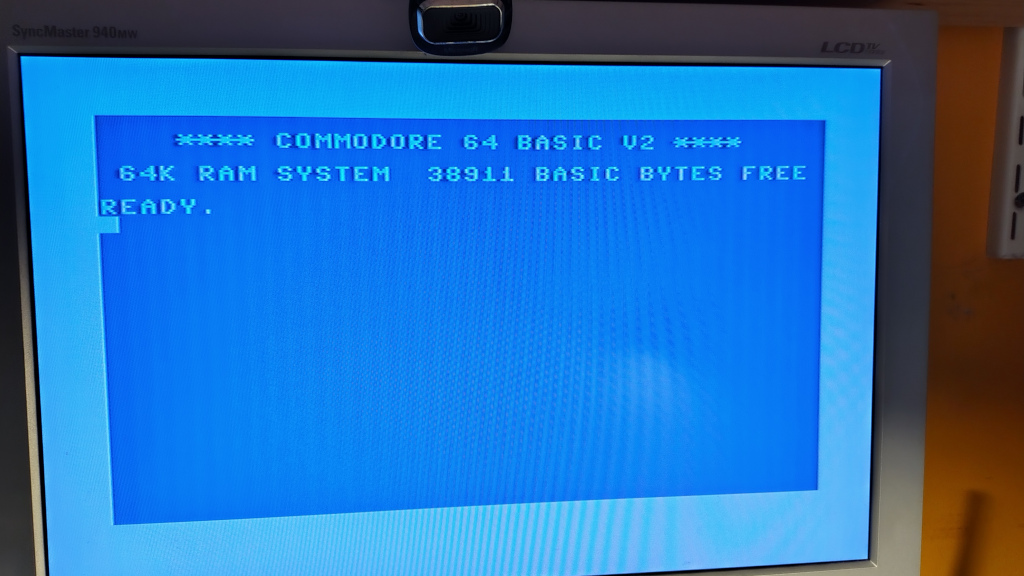
Yay - we're running!
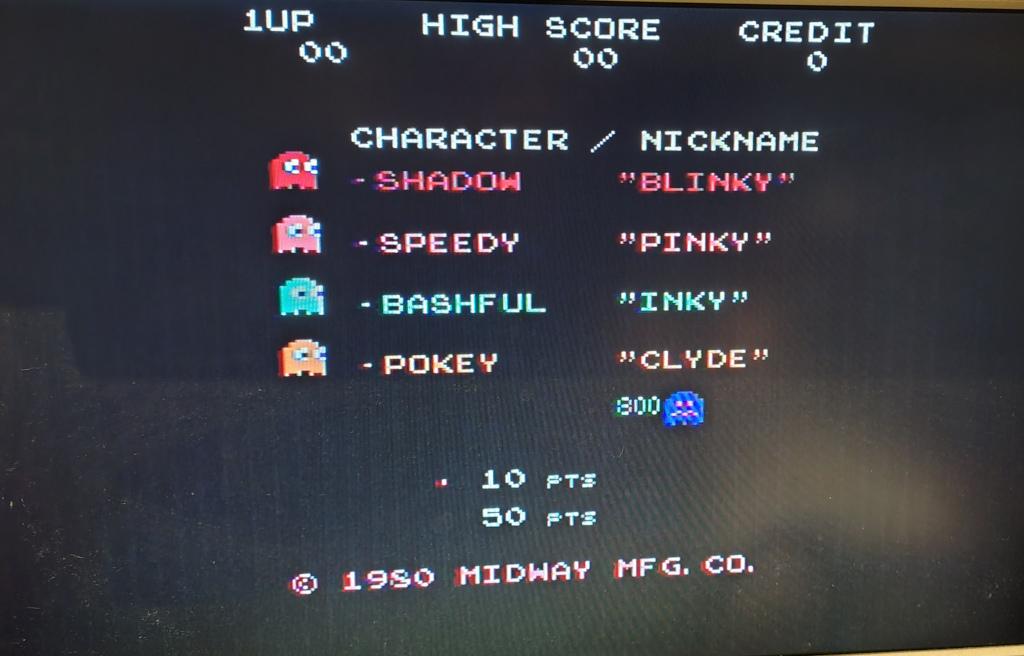
...and we're playing! |